Built with br.AI.n.: Rethinking Application Processing with Low-Code, AI, and Custom Development
Arguably one of the clearest and most valuable applications of generative AI in a business context is the transformation of unstructured data into structured information. This typically involves classifying documents such as MS Office files, PDFs, or scans of handwritten notes into predefined categories, extracting relevant information for specific processes, and then storing it in a structured manner, for example, as database entries with predetermined fields. This is precisely what was implemented in the IB.SH use case with the br.AI.n platform, achieving a hit accuracy of 94 percent.

Alexander Dolgopolskiy, Head of Data & AI, as of 07/16/2025
The Challenge: Less manual effort in application data entry
As many in practice know, applying for financing from a bank is one of the most documentation-intensive processes there is. Numerous documents from different sources, often in paper form, sometimes with handwritten additions and signatures, must be scanned, reviewed, and processed manually. Case workers classify the documents, check the content, and transfer relevant data into various specialized systems. This is a laborious task that takes time and is prone to errors.
The consequence: Customers have to wait, and errors result in additional effort. At the same time, the number of manageable applications is directly dependent on available personnel capacities.
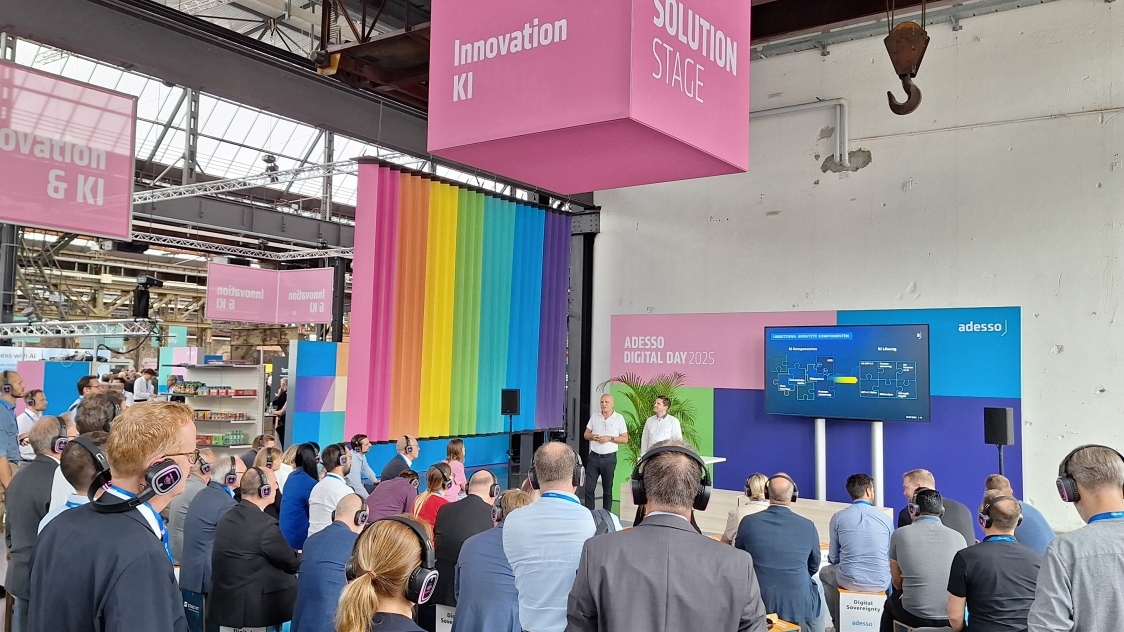
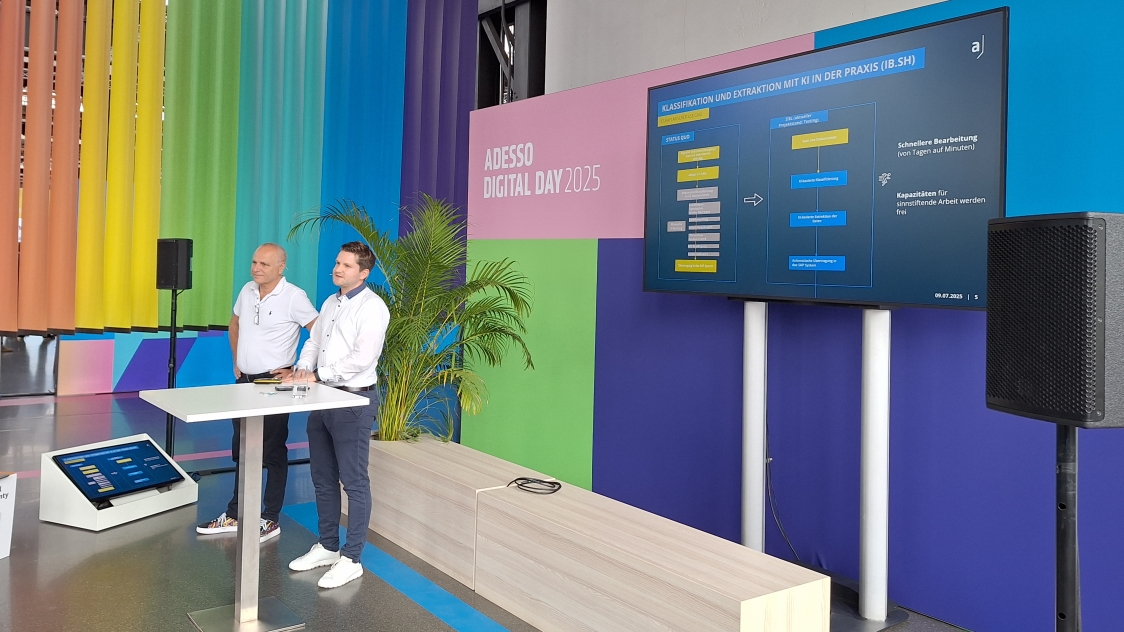
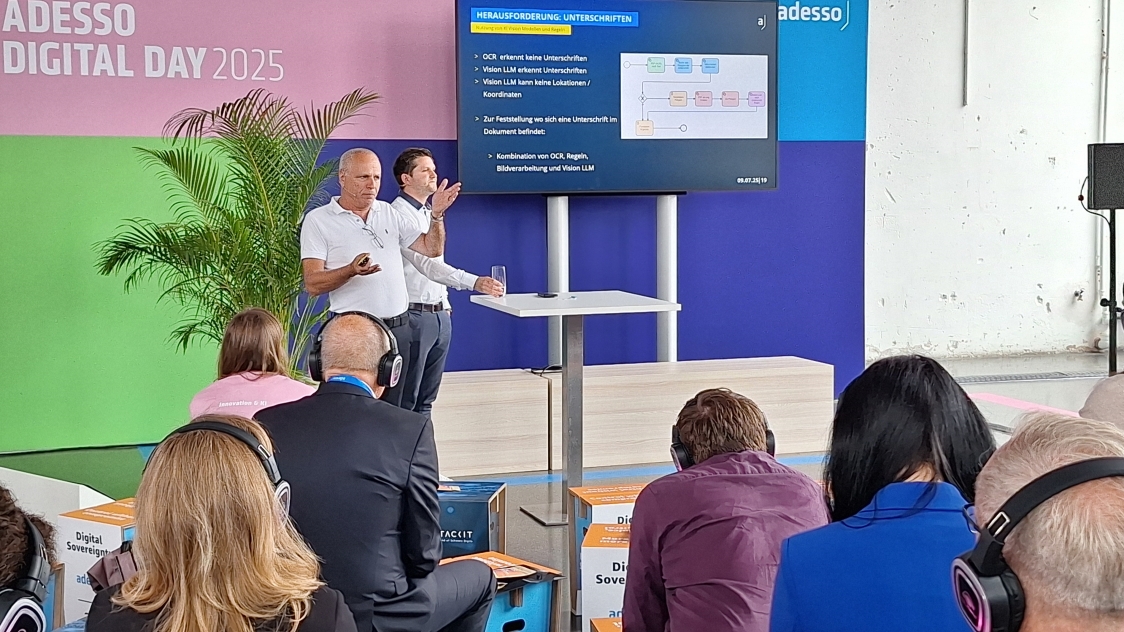
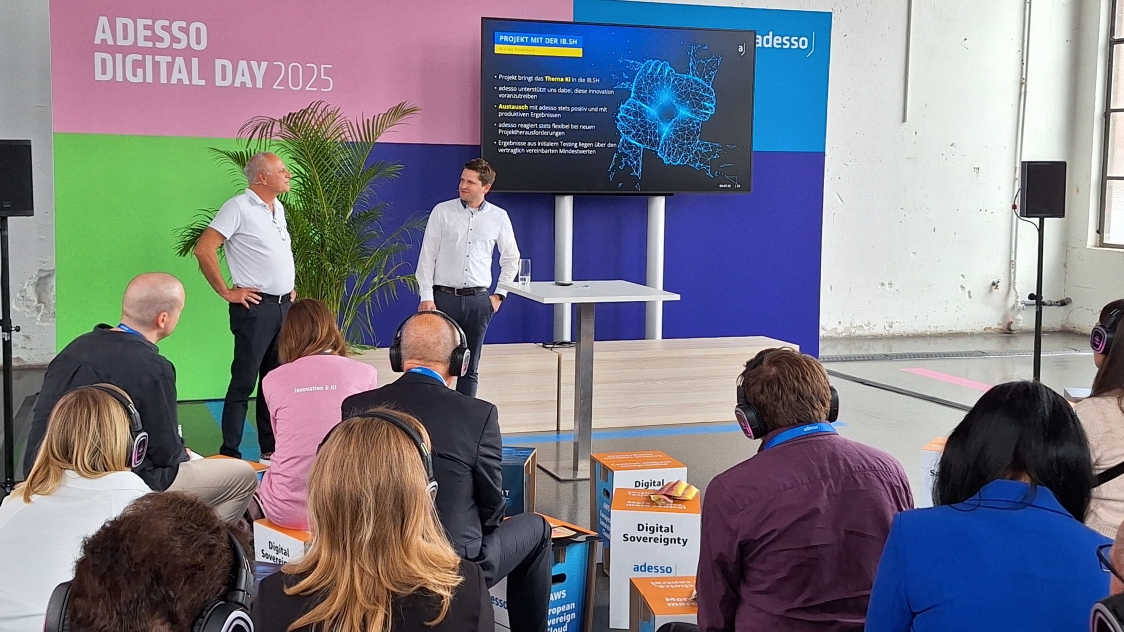
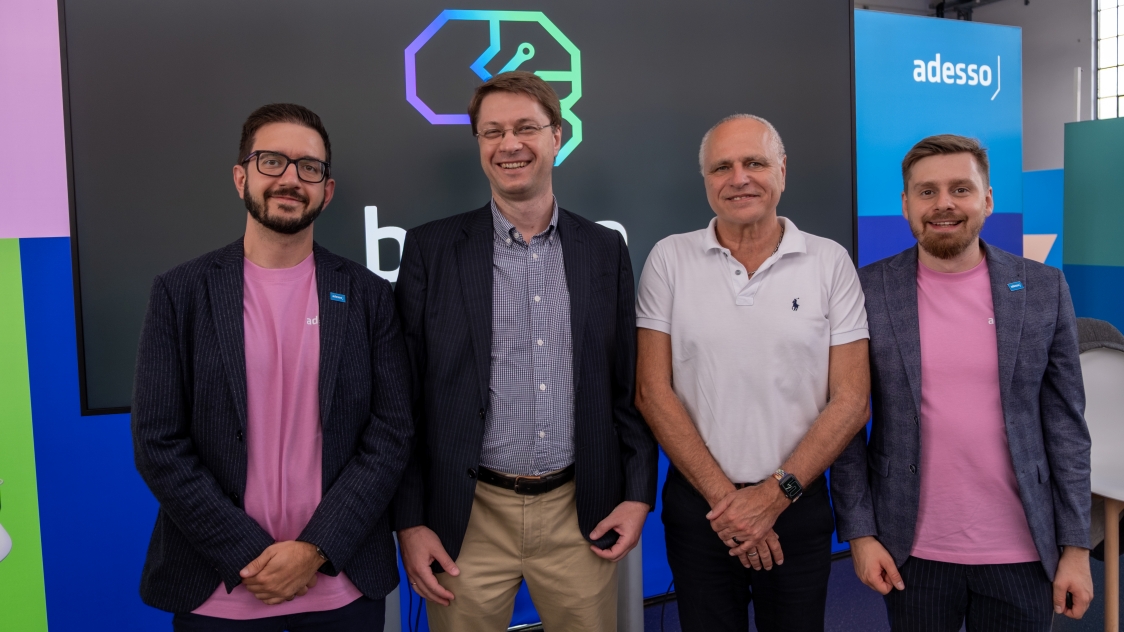
At the „adesso Digital Day 2025” on July 9, 2025, in Düsseldorf, Prof. Dr. Jürgen Angele (br.AI.n., adesso SE, left in the photo below) and Jan Hendrik Hoffmann (Investitionsbank Schleswig-Holstein, IB.SH, right) presented an innovative solution for precisely this challenge.
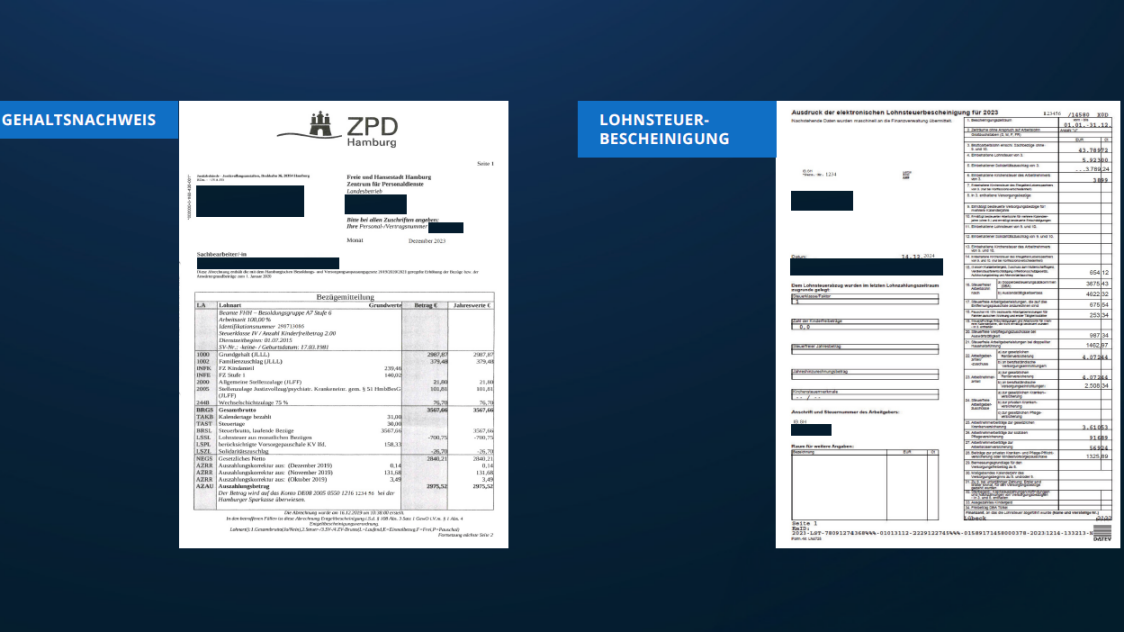
The manual standard process involved reviewing, classifying, and extracting relevant information from various document types such as:
The data was partially supplemented or annotated by hand. In the end, the data had to be manually transferred into IB.SH's SAP system. The goal: to largely automate this entire process in order to drastically reduce processing time.
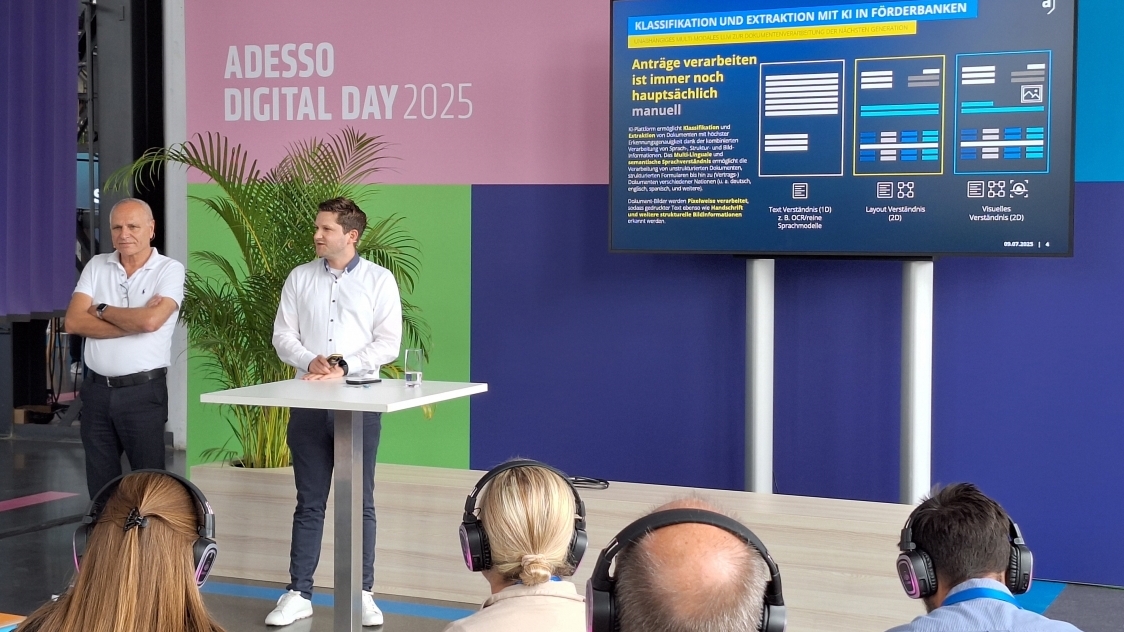
Processing applications is still primarily manual.
Why br.AI.n: Platform instead of individual AI island solutions
In the project with IB.SH, the decision was consciously made in favor of the AI platform br.AI.n from adesso SE, as individually developed AI solutions are often complex to set up, integrate, and scale. Lack of interoperability between components, fragmented system landscapes, and high maintenance effort quickly lead to technical and organizational limitations, especially in security- and compliance-critical processes such as the awarding of funding.
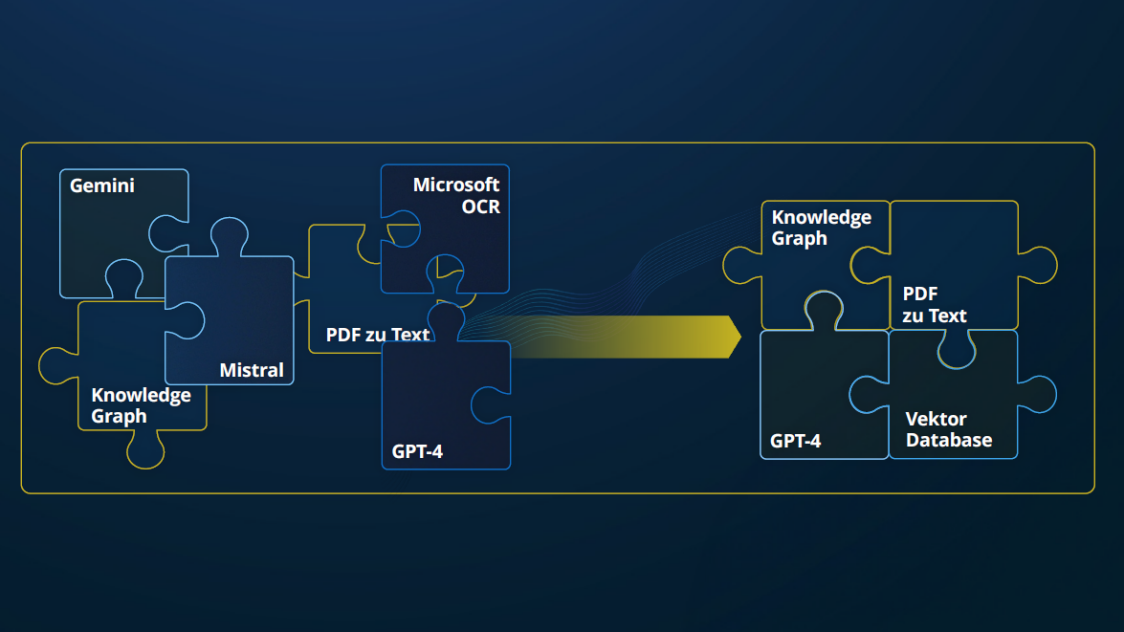
For this, br.AI.n bot requires a robust, workflow-based Java platform with standard connectors to third-party systems, an embedded semantic knowledge graph, and pixel-based document processing. This not only automated application review but also enabled structured monitoring, further development, and safeguarding. At the same time, the solution remained flexible in handling language, layout, and image information.
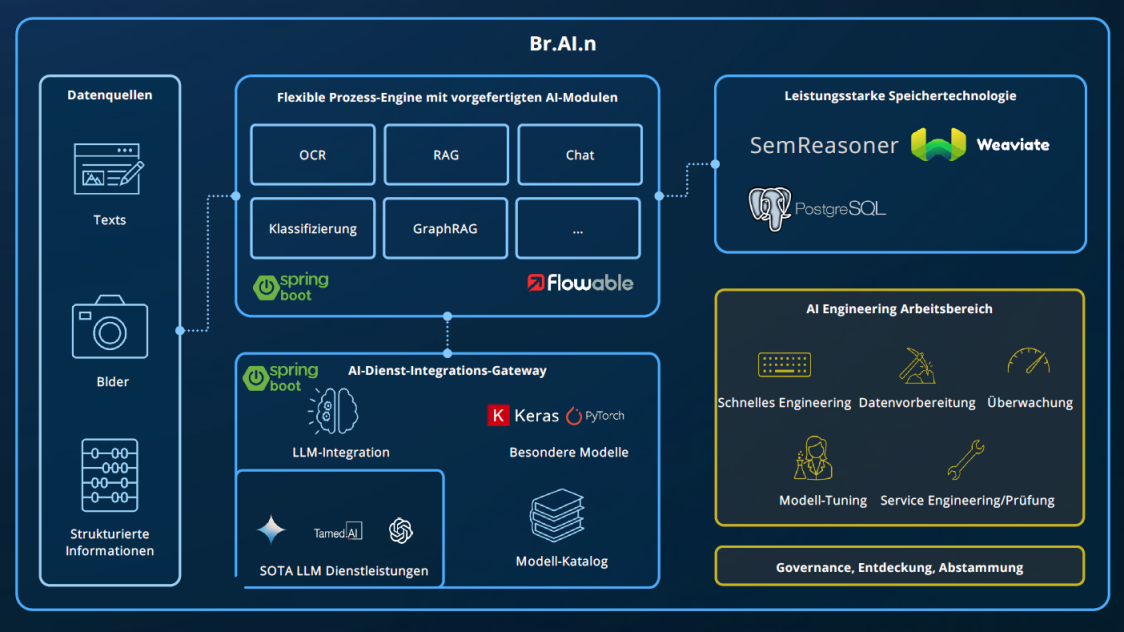
However, during the project, it became apparent that the platform's low-code features alone were not sufficient to fully meet the requirements. The project team consciously decided against extensive training of AI models for all variants of financial documents. Instead, a hybrid approach was chosen: the documents were interpreted using LLM-based analysis, followed by programmed rules and multi-stage process automation. This interplay allowed for more precise control of processing and ultimately delivered the necessary reliability in live operation.
Workflows: All Eyes on the Signature
The project's focus was not on complex model training, but on the design of a multi-stage workflow. The entire process was modeled using the platform's BPMN 2.0-compatible design tool. Each step in the diagram corresponded to an executable component. This could be classic code, a connected application, or an AI component, each embedded in rule-based process logic.
One particularly tricky challenge involved the signatures. These had to be reliably separated from the rest of the document and analyzed separately. According to the speakers, this was one of the biggest hurdles in the project. The solution consisted of a rule-based sub-process that first determined the coordinates of the signature in the document, cut it out, and passed it to the next process component for evaluation.
This modular and visually modeled architecture allowed for flexible control and good comprehensibility of the processing. This was particularly relevant for application processes with highly varying document structures.
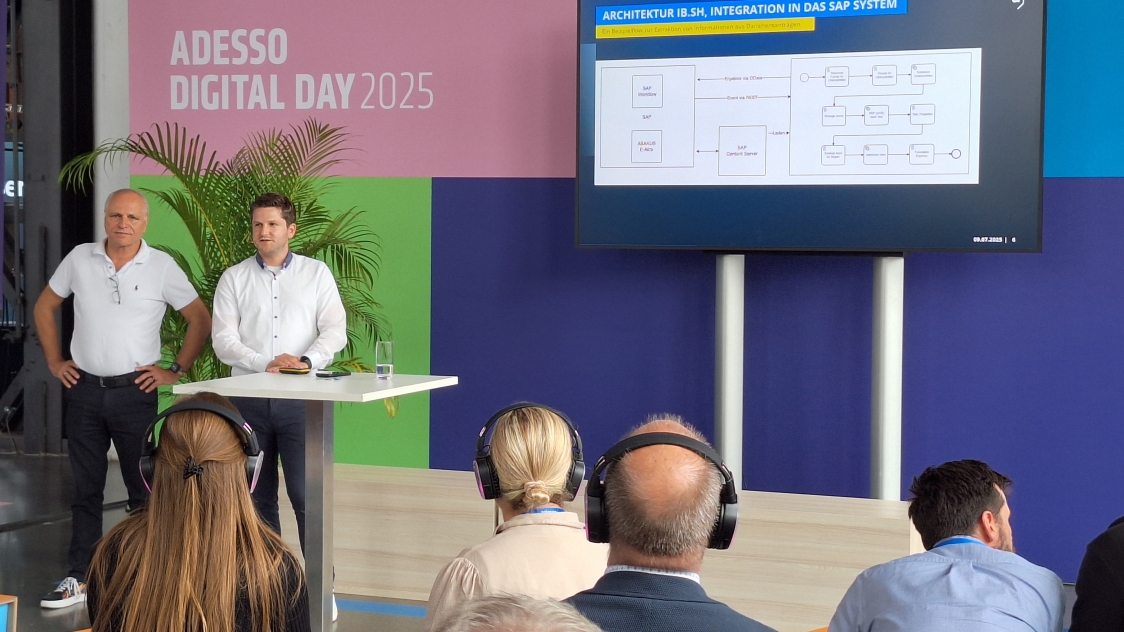
The remaining process followed a proven pattern for AI-based systems for processing unstructured data. After classification, the deployed LLM used predefined data models for each document type to extract the relevant content with field precision. The structured results were then asynchronously transferred to IB.SH's SAP system, where a final validation took place.
The accuracy achieved was 94 percent. This means that only around six percent of documents still required manual reworking. For IB.SH, this is not only a considerable gain in efficiency, but also a real step towards end-to-end digitized application processing.
Data Handling: Between Extraction and Calculation
Some document types, such as the DATEV wage tax certificate, follow a standardized structure and can therefore be read out relatively reliably. Others, such as salary or equity statements, vary greatly and often appear in company-specific formats. Nevertheless, it was shown that modern, general-purpose language models can also extract the required standard data from such variants with sufficient reliability.
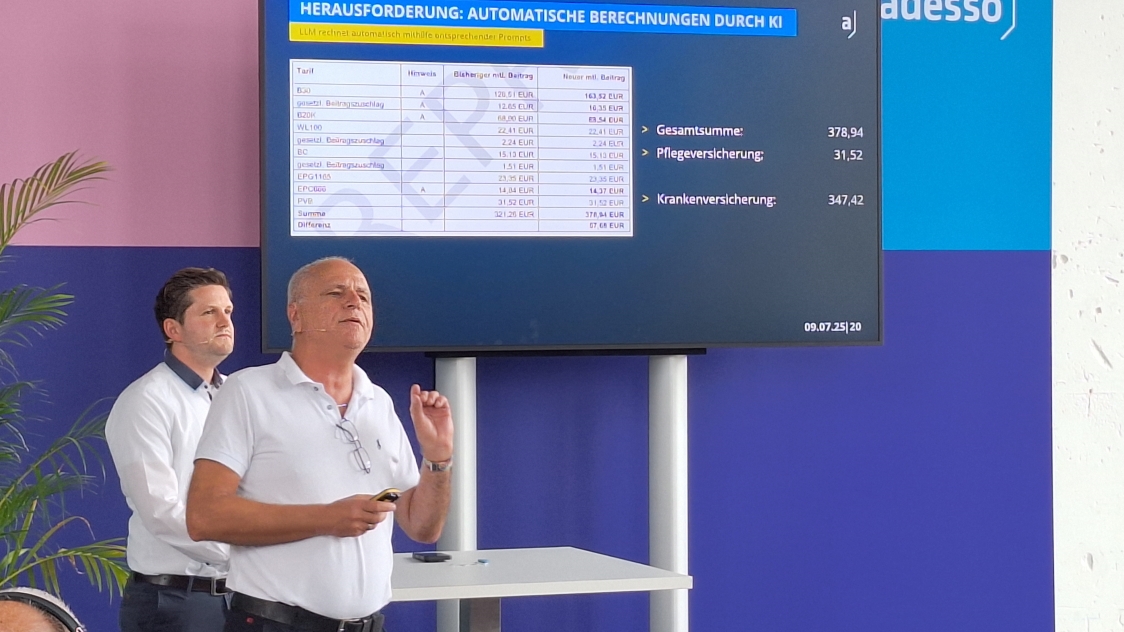
One of the speaker's statements was particularly interesting. According to it, certain calculations were performed directly with AI. This likely referred to aggregations as well as the derivation of differences or averages across multiple documents. However, based on my own experience with the platform, I would assess this more cautiously. It is more probable that the AI was used to extract values and then assign them to specific object or array fields. The actual logic, such as loops or mathematical calculations, was likely implemented in a traditional rule-based manner. I will inquire directly with colleagues at the next opportunity to find out exactly how this was resolved in this specific case.
Collaboration is key: Platforms enable, but people create
The solution is currently in the final testing phase before its planned go-live. As is often the case, success depends primarily on close collaboration between the client's business department and an experienced IT team. What's crucial here is not only technical know-how and tool proficiency but also the willingness to break new ground. This is not a given, especially in the conservative environment of banks and in the sensitive area of data management.
In the case of IB.SH, precisely this openness was present. The choice of a standardized AI platform played an important role in this. It not only offered technical flexibility but also the necessary reliability and compliance basis to develop a viable solution.
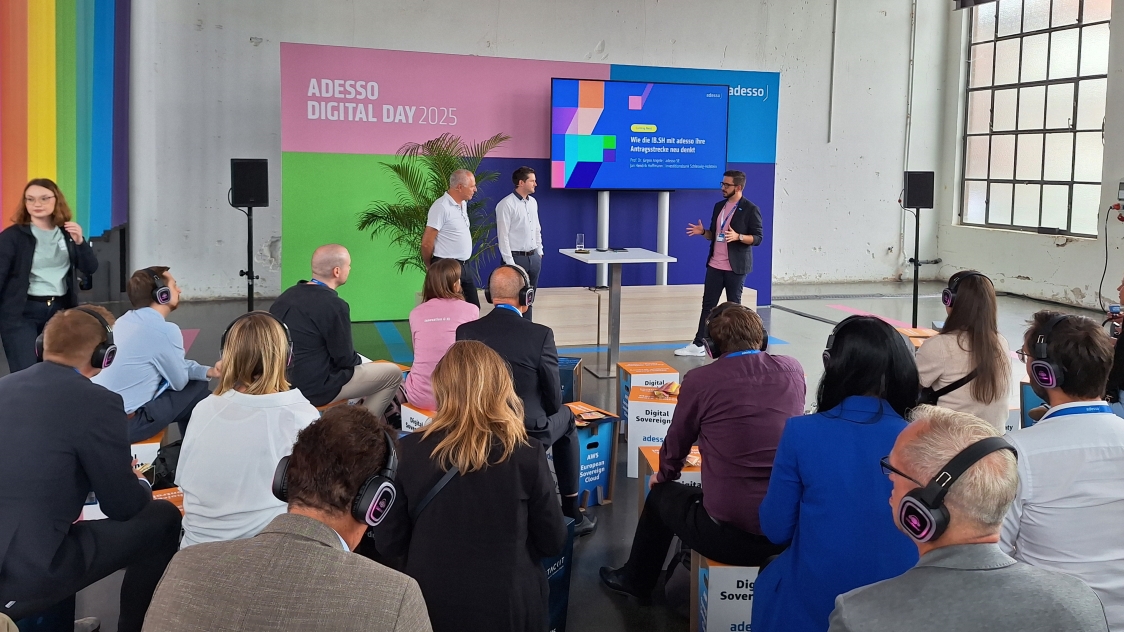
To conclude, here are a few impressions from the event. The following photo shows Tim König, Head of Generative AI at adesso SE. He moderated the „Innovation & AI“ track at the Digital Day and supported Jürgen Angele and Jan Hendrik Hoffman at the end of their presentation.
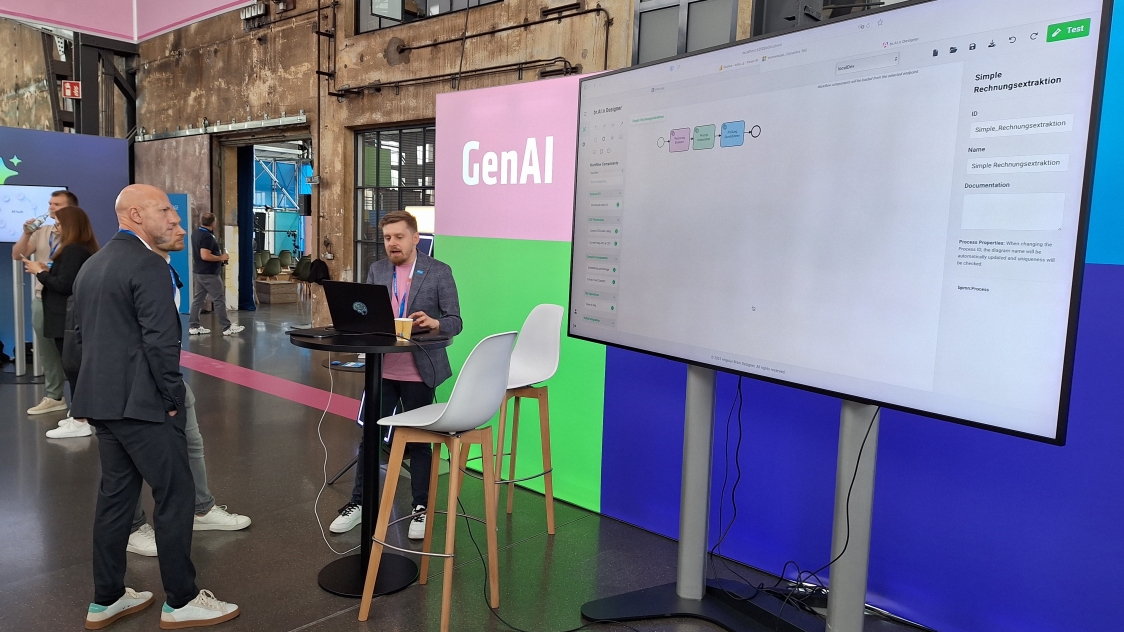
And here we see Tim Bunkus, Solution Manager GenAI at adesso SE, at the adesso booth. The br.AI.n platform with the Process Designer Studio is being demonstrated there, and an exemplary BPMN workflow can be seen.
A joint step forward for br.AI.n, evia, and adesso
The Digital Day marked an important milestone for the br.AI.n platform and for both companies involved, evia and adesso. On the one hand, the official public go-live of the platform was announced. Previously, br.AI.n was exclusively used in customer projects by adesso SE. At the same time, the evia Group was introduced as the first and, to date, only distribution and integration partner for the platform.
This means, specifically: better together. While the br.AI.n core team focuses on the further development, optimization, and support of the platform, the experts from the evia Group will handle the implementation of modern AI projects for our joint customers. This also includes consulting, managed services, deployment, and hosting, both on-premises and in all common cloud environments, including sovereign cloud offerings in Germany.
Would you like to discuss non-bindingly how your AI-powered use case can find the fastest, safest, and most efficient path to production? With br.AI.n and the combined experience of evia and adesso? Then follow the link below to the platform page and our contact form. I will get back to you promptly.
 German
  English